What are engineering design services?
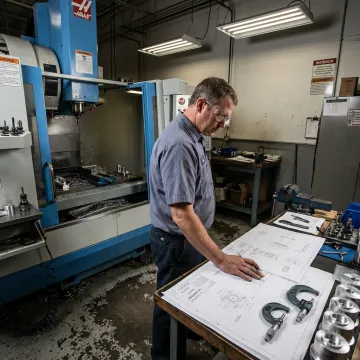
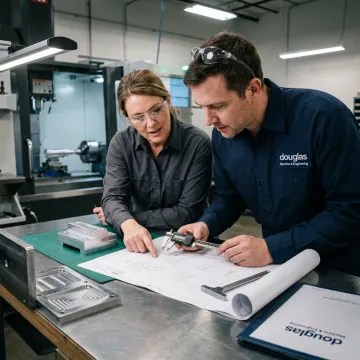
Engineering design services turn product ideas, manufacturing needs, or process challenges into practical technical solutions. They may include concept development, CAD planning, material and process selection, tooling strategy, automation planning, production workflow design, and quality verification. At Douglas Machine & Engineering, design support connects directly with CNC machining, fabrication, inspection, finishing, and installation.
What does a design engineer do?
A design engineer analyzes requirements, develops technical concepts, creates manufacturable solutions, and helps determine how a part, assembly, fixture, or system should be produced. In a manufacturing environment, that role often includes coordinating with machinists, fabricators, welders, inspectors, and automation teams to ensure the design can be built accurately, efficiently, and reliably.
Can Douglas Machine & Engineering take a project from concept to finished product?
Yes. DM&E’s value proposition is a one-stop workflow that can take a concept, develop a process, and produce a finished product. The team supports design, program management, CNC machining, fabrication, welding, inspection, coating, automation integration, and coordination with qualified suppliers for services such as plating or heat treat when needed.
What industries use your design engineering services?
Douglas Machine & Engineering supports industrial, aerospace and defense, pharmaceutical, agricultural, robotics, food grade packaging, and construction customers. These industries often require precise tolerances, reliable documentation, strong supplier coordination, and durable finished components or systems that perform in demanding production environments.
How do you ensure engineering and manufacturing quality?
Quality is supported through ISO 9001:2015 and AS9100D certification, AWS certified welders, inspection planning, dimensional verification, first article inspection reporting, CMM analysis through Exact Metrology, certified gauges, and quality documentation. This approach helps ensure the finished product stays aligned with customer specifications and regulated industry requirements.
Do you support automation and robotic system design?
Yes. DM&E designs, builds, retrofits, tests, and integrates turnkey robotic and automation systems tailored to customer workflows. Capabilities include robotic welding units, assembly systems, system retrofits, full unit testing, on-site setup, and validation to help ensure precise placement, functionality, and operational readiness.
What information should I provide before starting a design engineering project?
Helpful starting information includes drawings or sketches, application requirements, expected loads, target materials, tolerances, production volume, required finishes, inspection standards, industry compliance needs, budget goals, and delivery timeline. If you do not have complete documentation, the team can still begin by reviewing the concept and identifying the next engineering steps.
How does project management reduce cost and complexity?
By managing multiple processes under one coordinated workflow, DM&E helps reduce transportation costs, supplier handoffs, and the need for multiple purchase orders. The company keeps design, production, finishing, inspection, and outside supplier coordination aligned, which improves communication and helps preserve quality control through the finished product.